Choosing among remodeling contractors in Chicago can feel harder than the renovation itself. Homeowners are not just comparing prices – they are trying to avoid delays, unclear estimates, poor communication, permit issues, and work that looks good at first but does not hold up over time. If you are planning a kitchen remodel, bathroom renovation, condo update, basement finishing project, or a full home transformation in Chicago or the greater Chicagoland area, the right contractor can make the entire experience smoother, safer, and far more rewarding.
A smart decision starts with understanding what separates dependable, high-performing remodeling companies in Chicago from crews that simply promise a low number. You need a team that knows local building requirements, manages design and construction together, communicates clearly, respects your budget, and has the experience to handle everything from single-family homes to high-rise condo renovations.
At 123 Remodeling, this is exactly how we approach renovation: a full design-build process from concept to construction, with interior design, planning, permits, project management, skilled trades, and quality craftsmanship under one roof. For Chicago homeowners, condo owners, townhouse owners, and North Shore families, that integrated approach can make the difference between a stressful remodel and a well-executed investment in your home.

What Chicago Homeowners Should Really Look For
Many articles about hiring a contractor repeat the same advice: get three bids, check references, and make sure the company is insured. That is important, but it is not enough for a Chicago-area remodel. Local projects often involve older housing stock, condo board approvals, city permits, parking and access constraints, structural surprises, and building-specific rules that can affect timing and cost.
The strongest home remodeling contractors in Chicago tend to stand out in seven areas:
- Proper licensing and insurance
- Relevant project experience
- Design-build capability
- Detailed estimating
- Strong project management
- Clear communication and client service
- Proven quality and local reputation
If a contractor is weak in even one of these areas, the project can become much more difficult than it needs to be.
Why Chicago Remodeling Is Different
Chicago remodeling is not the same as remodeling in a newer suburban tract development. The city and surrounding communities present very specific conditions that require local expertise.
Older Homes Require Better Planning
Many Chicago homes include aging plumbing, outdated electrical systems, uneven floors, hidden water damage, old masonry, or framing conditions that are only discovered after demolition. A reliable contractor anticipates this possibility and explains how contingencies are handled before work begins.
Condos and High-Rises Add Another Layer of Complexity
Condo remodeling often requires:
- Building management coordination
- Insurance certificates
- Elevator reservations
- Work-hour restrictions
- Noise policies
- Debris removal protocols
- HOA or condo association approvals
This is one of the biggest gaps in generic advice online. Not every contractor who can remodel a house is equipped to remodel a Chicago condo efficiently. 123 Remodeling’s experience with condo and high-rise renovation requirements is especially valuable here.
Permits Matter More Than Homeowners Realize
Permits are not just paperwork. They affect legal compliance, inspections, safety, resale confidence, and project sequencing. A professional contractor should know when permits are required, who is responsible for obtaining them, and how they affect scheduling.
“In Chicago, contractors performing residential renovation work exceeding $1,000 must obtain a City of Chicago Home Repair License or a General Contractor License, and larger projects may require a full General Contractor License.” – Source

The Best Way to Compare Remodeling Companies in Chicago
When evaluating remodeling companies in Chicago, do not compare them on price alone. Compare them on process.
A Better Comparison Checklist
| Category | What to Look For | Why It Matters |
|---|---|---|
| Licensing | Active local licensing where required | Protects you and shows legal compliance |
| Insurance | General liability and workers’ compensation | Reduces homeowner risk |
| Services | Design-build, planning, permits, construction | Creates accountability under one team |
| Experience | Similar kitchen, bath, condo, basement, or full-home projects | Reduces costly surprises |
| Estimate | Clear scope, allowances, exclusions, and materials | Prevents misunderstanding |
| Timeline | Realistic schedule with milestones | Sets expectations honestly |
| Communication | Responsive, organized, and documented | Keeps the project moving |
| Reviews | Recent, detailed, local reviews | Reveals consistency |
| Warranty | Written workmanship or labor warranty | Reflects confidence in quality |
| Project Oversight | Dedicated project management | Improves coordination and outcomes |
This is where design-build firms often outperform fragmented teams. When design, selections, estimating, permitting, and construction are handled together, there are fewer gaps, fewer handoff issues, and less finger-pointing.
Why Design-Build Is Often the Smarter Choice
One of the biggest content gaps in competitor-style articles is the lack of meaningful explanation around delivery model. Homeowners are often told to “hire the best contractor,” but not told whether they should use a traditional bid-build route or a design-build team.
Traditional Approach
In a traditional setup, you may need to coordinate separately with:
- A designer or architect
- A contractor
- Multiple subcontractors
- Permit expediters
- Material suppliers
That can work, but it also creates more moving parts, more interpretation errors, and more responsibility on the homeowner.
Design-Build Approach
With a design-build company like 123 Remodeling, you get:
- Concept development and design support
- Space planning and layout guidance
- Material and finish selection help
- Detailed estimating
- Permit handling
- Construction scheduling
- Project management
- Skilled execution
- One team accountable from start to finish
For busy Chicago homeowners, that streamlined structure can save time, reduce confusion, and improve the finished result.
How to Verify a Contractor Before You Hire Them
Before signing anything, verify the basics yourself. A trustworthy contractor should welcome this.
Check These Essentials
- License status
- Insurance coverage
- Business address
- Portfolio of completed local projects
- Online reviews across multiple platforms
- References from recent clients
- Written contract terms
- Warranty details
Ask Better Questions
Instead of only asking, “How much will it cost?” ask:
- Have you completed projects like mine in Chicago or my suburb?
- How do you handle permits and inspections?
- What is included in the estimate and what is excluded?
- Who will be my day-to-day point of contact?
- How are change orders documented?
- What challenges do you expect with my property type?
- What materials and brands do you recommend and why?
- How do you protect occupied homes during construction?
- What kind of labor warranty do you provide?
Major Red Flags to Watch For
Some warning signs appear before a project starts. Take them seriously.
- Very low bid compared with everyone else
- Vague or incomplete scope of work
- Pressure to sign immediately
- Large upfront payment demands
- No proof of insurance
- No clear process for permits
- Poor communication early on
- No local references
- Unwillingness to put details in writing
The cheapest estimate often becomes the most expensive once change orders, shortcuts, delays, or repairs start adding up.
What a Good Remodeling Estimate Should Include
Homeowners often compare totals when they should compare scope. A professional estimate should be detailed enough to help you understand what you are buying.
Strong Estimates Usually Include
- Demolition scope
- Labor categories
- Material allowances or exact product specs
- Plumbing and electrical work
- Carpentry and drywall details
- Tile, flooring, and finish work
- Permit responsibilities
- Cleanup and debris removal
- Project timeline assumptions
- Exclusions and change-order policy
Pricing: What Drives Remodeling Costs in Chicago
Chicago remodeling costs vary widely because homes, buildings, neighborhoods, and goals vary widely. Still, the same cost drivers appear again and again.
Main Cost Factors
| Cost Driver | Why It Affects Price |
|---|---|
| Project scope | Cosmetic refresh vs. full gut renovation |
| Property type | Condo, bungalow, townhouse, vintage two-flat, single-family home |
| Structural work | Wall removal, framing changes, reinforcements |
| Mechanical upgrades | Plumbing, electrical, HVAC changes |
| Material selections | Cabinets, tile, countertops, fixtures, flooring |
| Permits and approvals | City requirements, condo board review, inspections |
| Access conditions | Parking, stairs, elevators, protected common areas |
| Timeline | Rush scheduling can increase costs |
| Craftsmanship level | Custom work costs more than builder-grade installation |
Remodeling Projects That Need Specialized Expertise
Not every contractor is equally strong across all project types. One of the most practical ways to compare home remodeling contractors in Chicago is to ask where they truly specialize.
Kitchen Remodeling
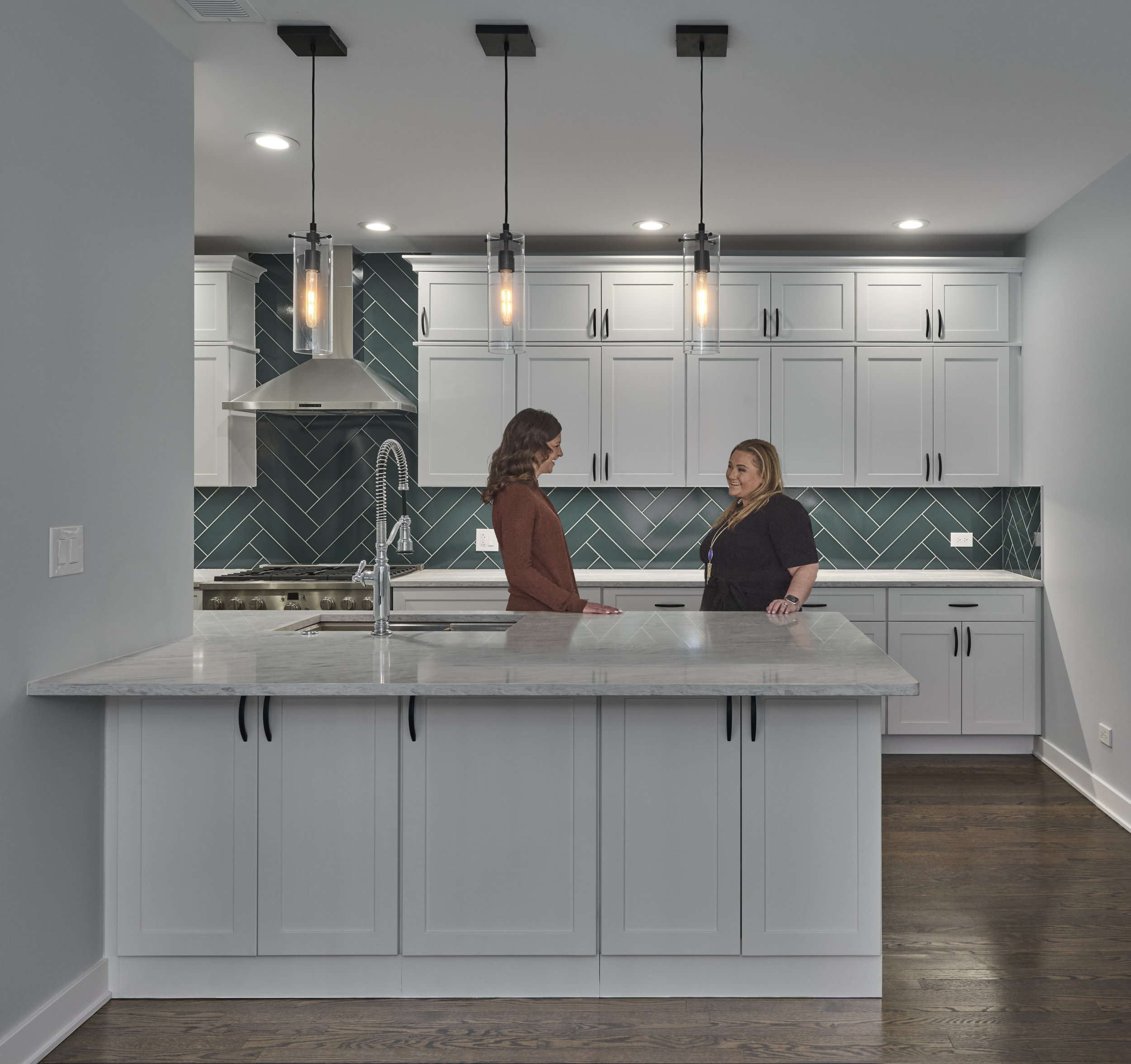
Kitchen remodels require coordination across cabinetry, layout, lighting, plumbing, electrical, ventilation, appliances, and finishes. Look for a contractor that can help with layout optimization, storage planning, and durable material selection.
Bathroom Remodeling
Bathrooms demand technical precision. Waterproofing, slope, ventilation, and plumbing quality all affect long-term performance.
Condo Remodeling
Condo projects require specialized knowledge beyond design and construction, including logistics, documentation, and compliance with building rules.
Basement Finishing
A basement project should address moisture control, insulation, ceiling planning, egress, lighting, and mechanical access.
Full Home Renovation
Whole-home remodeling is where project management becomes critical. This is a major reason homeowners choose 123 Remodeling’s integrated team.
Reviews, Reputation, and Real Project Quality
Look for patterns in reviews, not just star counts. Strong reviews usually mention communication, cleanliness, staying on schedule, and transparency in billing.

Remodeling as an Investment
A remodel should improve how you live now, but it also affects resale value later.
“According to the 2025 Cost vs. Value Report, the national average ROI is about 56% for a midrange major kitchen remodel and about 60% for a midrange bathroom remodel.” – Source
Why Timelines Go Wrong – and How Good Contractors Prevent It
Delays are often caused by incomplete planning, slow material decisions, or poor coordination. Reliable contractors reduce delays by planning thoroughly and documenting decisions early.
A Simple Step-by-Step Hiring Process
- Step 1: Define Your Goals (Storage, layout, style, etc.)
- Step 2: Set a Realistic Budget Range
- Step 3: Shortlist Qualified Contractors
- Step 4: Review Their Process
- Step 5: Compare Scope, Not Just Price
- Step 6: Check References and Reviews
- Step 7: Choose the Team You Trust
Why Homeowners Across Chicagoland Choose 123 Remodeling
123 Remodeling offers a full design-build service, specialized expertise, and a one-year labor warranty. Clients benefit from personalized design guidance and a strong local reputation. Contact 123 Remodeling today to get a free estimate for your project.